What Does Design Mean?
Design, which entered the language as the equivalent of the English and French word design, is a term of Latin origin. Design, a means of connection between perception and concept, is a concept that has no direct relation to objective reality. In design, important features draw attention rather than insignificant details. As a result, generalizations are made from perceptions.
Design is fundamentally an element of acquiring knowledge. The reason is that sensory design and mental design constantly influence each other. Rational knowledge and sensory knowledge are therefore always intertwined. This is also how true knowledge is formed. Design, which lies at the foundation of the fine arts, is the creative process itself. It encompasses the process of preparing the plans needed for any activity.
Design is used to mean shaping or constructing something, and it includes the workings related to the organization of a structure.
In the field of applied design, three headings emerge: industrial design, environmental design and graphic design. In industrial design, products are designed. Accordingly, every kind of tool, utensil, kitchenware and machine counts as industrial design.
In environmental design, another branch, landscape designs, building designs and interior designs are produced. Environmental design, which covers many areas, aims to create quality, durable designs. In graphic design, images that are generally read or viewed are designed. The aim of graphic design is to raise aesthetic quality to the highest level.
Design Processes
Design is carried out by passing through certain processes. The first stage of the design process is defining the problem. In a design problem, the first step toward a solution is defining the problem. It is the stage carried out to understand what the subject is and to fully internalize it.
To find a starting point for the design to be made, it is necessary to gather information about the problem. In other words, the second stage of the design process is the information-gathering stage. Another path is the stage of creativity and invention. If the designer or design student conducts research on the subject, collects the necessary information and data and evaluates them, they have reached creativity.
In the process of creativity and invention, work aimed at laying out the problem and exploring all possibilities also forms part of the solution-finding process. In the final stage, the implementation stage, the completed design is made ready.
Design Elements
Another piece of essential knowledge in design is the principles of design. Whatever field a design is made in, design has certain principles. In the flow of daily life, many designs are made, consciously or unconsciously.
To create a proper design, the principles of design must be known and the best design made accordingly. But before that, the elements of design must be understood. The basic elements of design are as follows:

Line
One-dimensional geometric forms with no width or depth are called lines. Lines come in every variety: straight or curved, thin or thick, dashed and sharp. These lines carry certain meanings. A horizontal line signifies calm. A vertical line is used to mean dignity, a curved line elegance, and a diagonal line vitality.

Color
Color, a property of light, is the effect light leaves on the senses after striking objects and reflecting back. Colors also carry certain meanings. Red is used to mean danger, power and excitement. Green expresses calm and naturalness.
Blue conveys coolness and sadness. Black conveys prestige and sophistication. Yellow expresses wealth and luxury. Purple expresses nobility, while transparency expresses purity. When creating a design, attention should be paid to the meanings of colors.
Shape
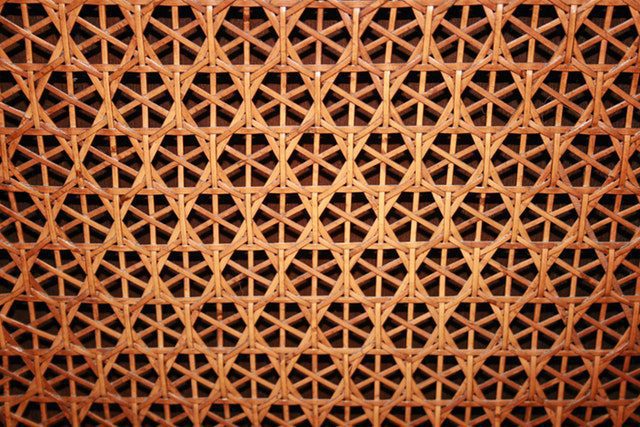
The area enclosed by closed linear elements, along with different colors, textures and values, can be expressed through shapes. Designs are enriched with geometric shapes.

Value
Value, a property of light, is one of the important elements of design. It is also called brightness or tone. For the highest value contrast, only black and white are used.
Texture
The final element of design is texture. Texture expresses the surface quality of an object. It conveys the object’s smoothness and its tactile surface feel.
The Principles of Design
The principles of design are essential for bringing the elements together to create effective communication. These guiding principles are explained below.
Unity
Unity means that each part gains meaning not on its own but as part of the whole. Unity is the most important of the design principles. It is also often the most difficult. Without the principle of unity, which is supported by the other principles as well, a design can never be successful. Thanks to this principle, which makes a design look more whole, all the elements support the design.
Variety
Variety means differentiating and changing the character of an element. The principle of variety, the complement of the principle of unity, is necessary for creating visual interest. Just as a design cannot be created without unity, it is equally impossible to create a design without variety.
Emphasis
Emphasis, which creates the focal point in a design, shows how attention is drawn to the most important area. Without emphasis, an image cannot attract attention. At this stage, a contrast of direction, texture, color, form, tone or line is established between the element that should be in the foreground and the element that should remain in the background.
Balance
The final principle of design is balance. It is used to mean the equal distribution of a design’s visual weight. If the principle of balance is present in a design, it is understood that the design is at peace with itself. Visual balance, formed around a vertical axis, is the equal distribution of visual weight.
There are two different kinds of balance in a design. Symmetrical balance means being at the same distance from an axis, while asymmetrical balance means being at different distances from an axis. For an effective design, attention must be paid to both the elements and the principles of design.