
Alfonso Bialetti was an Italian engineer and inventor who lived between 1888 and 1970. He owes his real fame to the Moka Express, the stovetop coffee pot he developed in 1933. Because this small aluminum device made it possible to brew an intense, espresso-style coffee at home, it became one of the symbols of Italian coffee culture and found its place in millions of kitchens around the world.
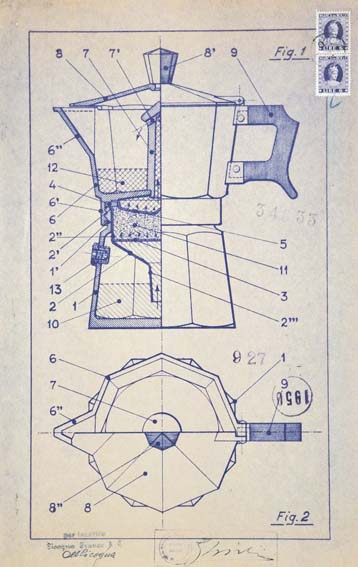
Cross-section view of the coffee maker
Bialetti spent a significant part of his professional life in aluminum processing and casting. After gaining experience in this sector in France, he returned to Italy and set up his own workshop. The fact that aluminum could be cast into complex shapes laid the foundation for the multi-part, mass-production-ready structure of the coffee pot he would later design. In other words, the Moka Express was not just a coffee tool but a piece of engineering in which material knowledge was turned into design.
How did the Moka Express come about?
The idea for the Moka Express is said to have been inspired by the laundry methods of the period. In those years, laundry was boiled in a sealed vat with a fire burning underneath; the resulting pressure pushed the soapy water up through a central pipe and distributed it over the clothes. Bialetti realized that the same pressure principle could be used to brew coffee. The steam pressure created by the heating water in the lower chamber carried the water through the ground coffee and into the upper chamber. This made it possible to produce a dark, aromatic coffee in a home kitchen without the need for an expensive bar machine.
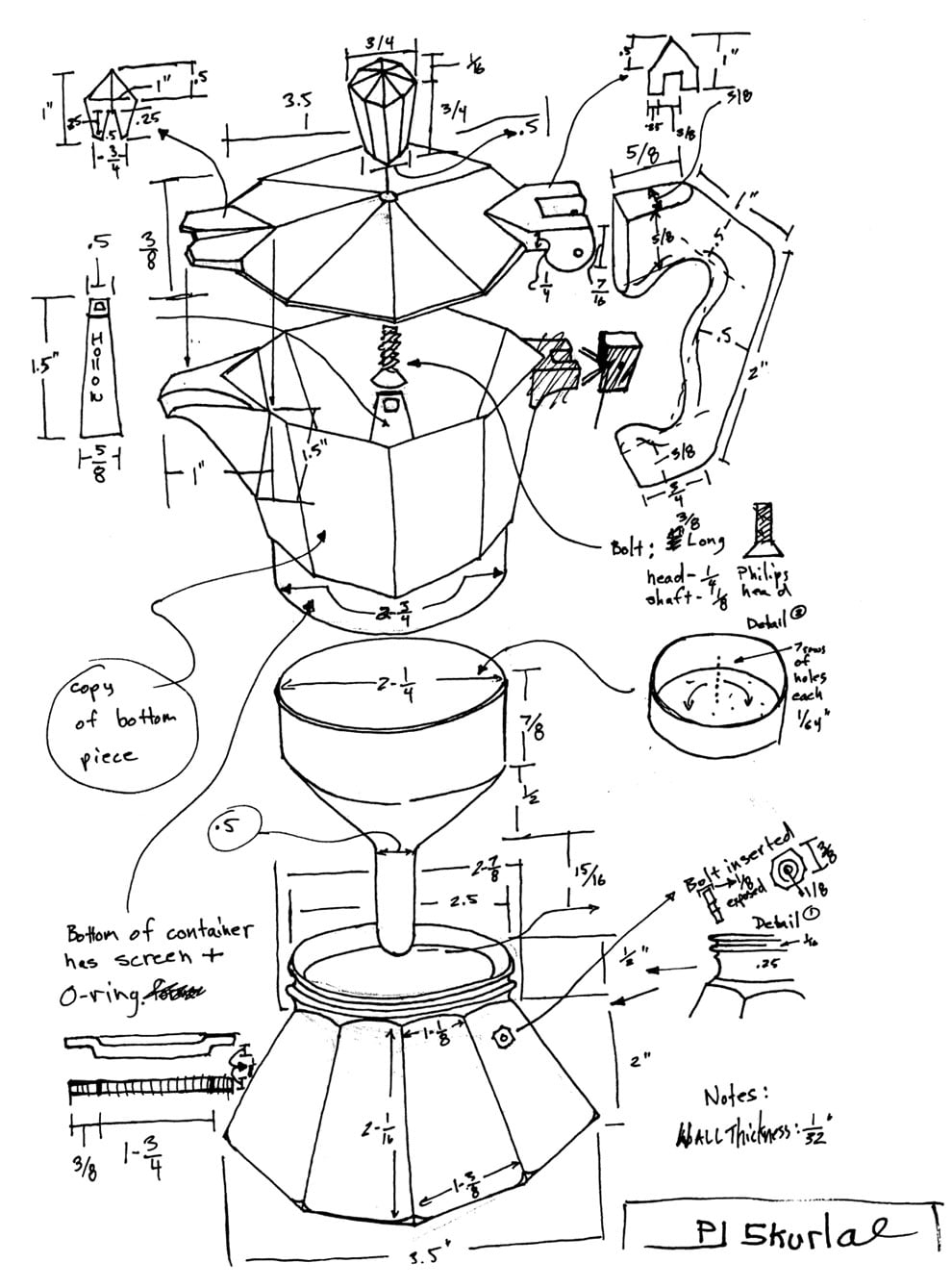
The device consists of three main parts: the lower chamber that holds the water, the funnel-shaped filter where the ground coffee is placed, and the upper chamber where the brewed coffee collects. This simple but clever arrangement made it both easy to use and capable of being produced almost unchanged for decades.
What is the meaning of the eight-sided design?
The most recognizable feature of the Moka Express is its eight-sided (octagonal) body. This shape is not merely an aesthetic choice. The faceted structure helps the heat from the stove spread evenly across the metal body and lets light refract off the surfaces at different angles, creating a striking appearance. The design reflects the geometric, gleaming aesthetic of the art deco movement of the 1930s.
This strong formal identity carried the device beyond being a kitchen tool. Over time, the Moka Express became an object included in the design collections of institutions such as the Museum of Modern Art (MoMA) in New York, counted among the classics of Italian industrial design. One of the fundamental principles of good design, thinking of form and function together, is clearly visible in this product.
How did the Bialetti brand become an icon?
Although Alfonso Bialetti invented the product, the person who turned the brand into a worldwide name was his son, Renato Bialetti. In the postwar period, Renato scaled production up to large-volume manufacturing and, through effective advertising campaigns, made the Moka Express the standard tool of every Italian household. The brand’s emblem, the little mustachioed man with his finger raised (“l’omino con i baffi”), is a character drawn by a cartoonist inspired by Renato Bialetti, and it still appears on the products today.
The famous logo
Why is the Moka Express important in design history?
The endurance of the Moka Express is a powerful example of how good design can survive without succumbing to the trends of its time. Remaining in production for more than ninety years while preserving its basic form and working principle is a rare achievement in the design world. Being cheap, durable, easy to use and repairable made it a product that is both functional and democratic. Opening up an expensive technology to everyone through a simple engineering solution was also true to the real purpose of industrial design.
Today the moka pot lives on as one of the essential tools of home coffee in many countries around the world. Alfonso Bialetti’s legacy is not just a coffee pot but a lasting design lesson in how material knowledge, engineering and aesthetics can meet in a single object.