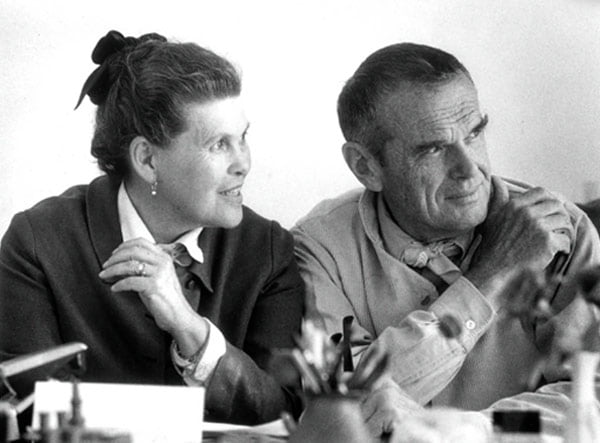
Charles and Ray Eames are the most influential design couple of the 20th century. Although the name Charles Eames usually brings to mind armchairs, sofas, chairs and similar seating, the couple’s work goes far beyond that. Their output spanned many fields, including architecture, photography, film, graphics and exhibition design, making them among the most prominent creators of their era. Their legacy is broad enough that documentaries have been made about them.
Working constantly alongside his wife Ray Eames, Charles acted almost like an inventor and researcher, driven by his interest in industrial production and in graphic and film work. For them, design was less about making an object beautiful than about solving a problem.
What did the Eames couple design together?
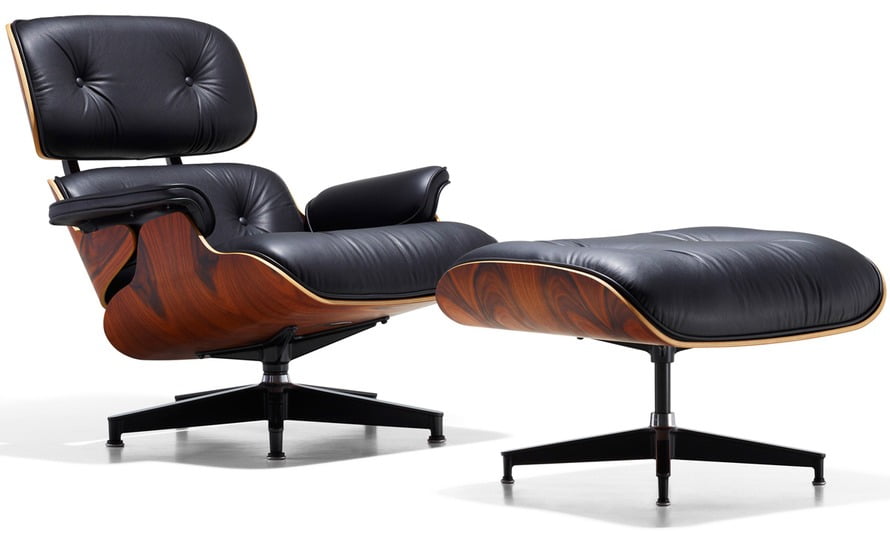
Charles and Ray Eames produced world-famous work, especially in furniture. Their best-known design is the Eames Lounge Chair and Ottoman, introduced in 1956. With its molded plywood shell and leather upholstery, this chair became one of the icons of modern furniture, bringing comfort and elegance together. Traces of the couple’s designs can still be found in many homes and offices today.
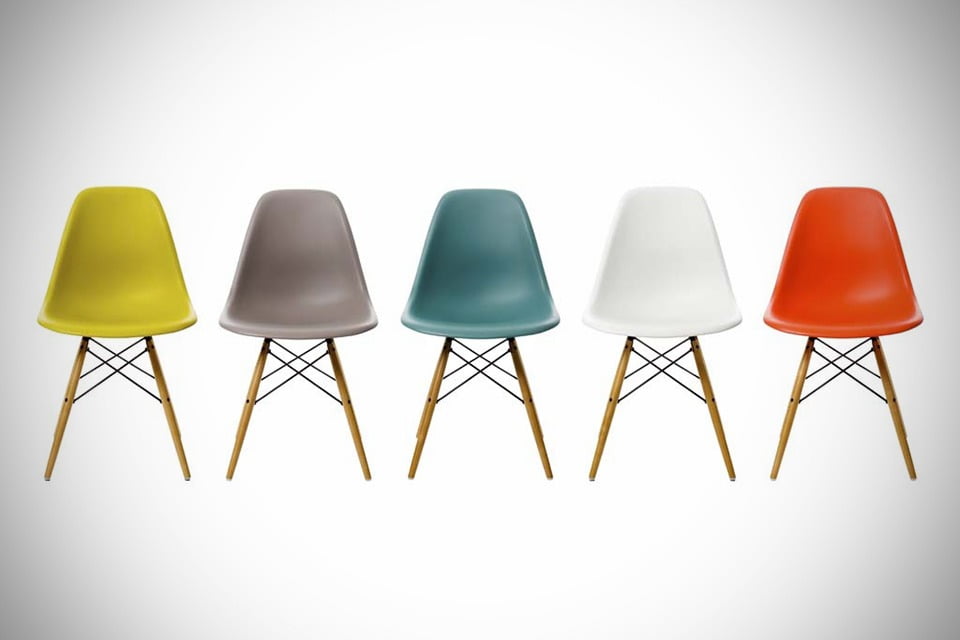
Another important contribution of the couple was their courage in using materials in new ways. Their experiments with bending and molding plywood during the Second World War allowed them to produce seating that was both light and durable. Later, with designs such as fiberglass-reinforced plastic shell chairs, they developed affordable products suited to mass production and brought modern furniture to wide audiences.
What does the Eames House represent in architecture?
The strongest proof that the couple was not limited to furniture is the Eames House. This home, which they designed and built for themselves in California, is known as Case Study House No. 8. Its most striking feature is that it was assembled not from custom-made elements but from standard, ready-made industrial building components available on the market. This approach is considered an important example of economical and rational construction in modern architecture.
The Eames House was not just a place where they lived but a laboratory where they tested their ideas. The house sums up the couple’s view of design: functional, honest and rooted in everyday life.
What do their film and graphic works show?
The Eames couple’s approach to design does not fit within a single discipline. Their best-known film work is the 1977 short film “Powers of Ten”. To explain the concept of scale, the film takes the viewer from a picnic scene out to the vastness of the universe and then down into the nucleus of an atom. This work is still cited today as a model educational film for conveying a complex scientific idea through simple, visual storytelling.
Alongside film and graphics, the couple also produced large exhibitions and fair designs. In their hands, design became a holistic field in which the boundaries between furniture, architecture, film and communication dissolved.
What was the influence of Eastern culture and materials?
The Eames couple were always in search of innovation and openly carried their sources of inspiration into their designs. Their interest in Eastern cultures and in natural materials, especially wood, shows itself in their plywood experiments and in their pursuit of warm, organic forms. Softening hard industrial materials with shapes that embrace the human body is a distinctive feature of their design language.
Thanks to this original approach, Charles and Ray Eames earned a lasting place among the leading names in 20th century design history. Their success is not the success of a single product but of a holistic, curious way of looking at design.