
Alvar Aalto, whose full name was Hugo Alvar Henrik Aalto, was born on 3 February 1898 in Kuortane, Finland. He died on 11 May 1976 at the age of 78 in Helsinki, Finland. Aalto worked across furniture, textiles, the glass industry and architecture. The Finnish designer’s work shows the influence of Nordic Classicism and rationalist modernism.
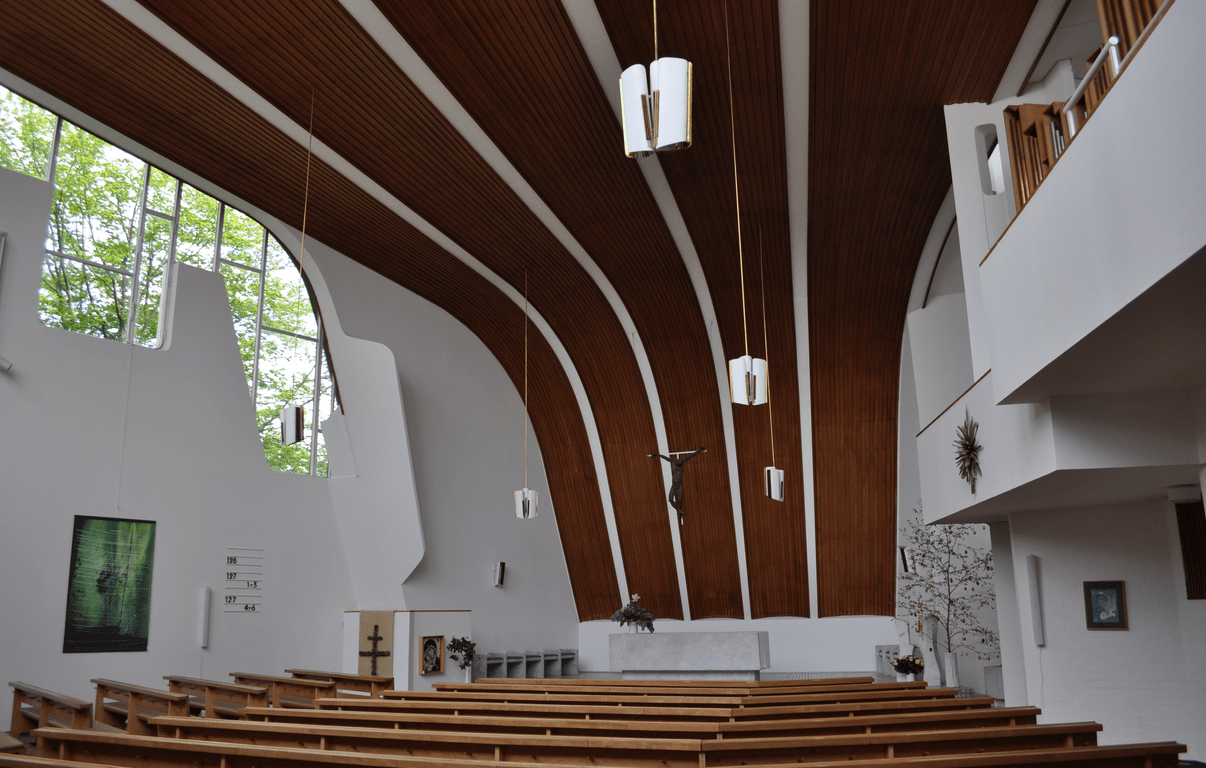
Aalto studied at the Jyväskylä Lyceum and at the Helsinki University of Technology. He completed his architectural education and graduated in 1921. After graduating, he opened his first architecture office in 1923. Aalto, who wrote articles for magazines and newspapers, produced a thesis titled “From the doorstep to the living room” in 1926. Between 1927 and 1935 he designed the Viipuri Library, which became a landmark building. The interior of the library, a project that took eight years, was designed with natural materials, warm colors and undulating lines. Baker House, completed in 1948, marks the beginning of Aalto’s red brick period. The designer and architect is known to have designed more than 500 buildings, most of them located in Finland.
Alvar Aalto, architect and designer
What was Aalto’s design philosophy based on?
The common thread running through Aalto’s work is his softening of modern architecture’s functionalist logic with a humane approach. While many of his modernist contemporaries embraced the cold geometry of steel, glass and concrete, Aalto brought local, natural materials such as birch to the fore. He preferred curved, organic lines over right angles, and surfaces warm to the touch over uniform industrial finishes. This attitude places at its center the relationship that the person using a space or an object builds with it through the body, the senses and everyday life.
This human-centered approach is also why he never separated architecture from furniture design. When designing a building, Aalto often thought through its seating, its lamps, its door handles and its glassware as well. The building thus becomes a coherent living environment, unified with the objects inside it. His effort to bring natural light softly into a space through lighting design is part of the same holistic thinking.
How did laminated wood and the bending technique develop?
One of Aalto’s most lasting contributions is the way he worked wood. His experiments with laminated and bent plywood around 1932 gave wood the flexible, continuous forms that until then had been expected mostly of tubular steel. While designers in the Bauhaus circle used chrome-plated steel tube for curved furniture, Aalto sought a way to achieve the same fluidity with a material that kept its warmth.
The best-known result of this work is the patented L-leg system, which allows the leg to be attached directly to the seat. Based on pressing thin layers of wood with glue and shaping them in a mold, this technique both simplified production and made the pieces stackable. The armchair he produced in the same period for the Paimio Sanatorium, with its seat shell bent from a single piece of plywood, became one of the emblems of this approach.
The tall stools are still in the shop window
Aalto also experimented with wooden sculpture. In 1932 he designed a piece of laminated bent-plywood furniture. After his furniture designs received positive reviews, a company was founded in London, England, and the year was 1935. The company was named “Artek”. Among Alvar Aalto’s furniture designs were chairs and tables. One of the standout products among these designs was the tea trolley. Alongside it, a chair as comfortable as an armchair was also made.
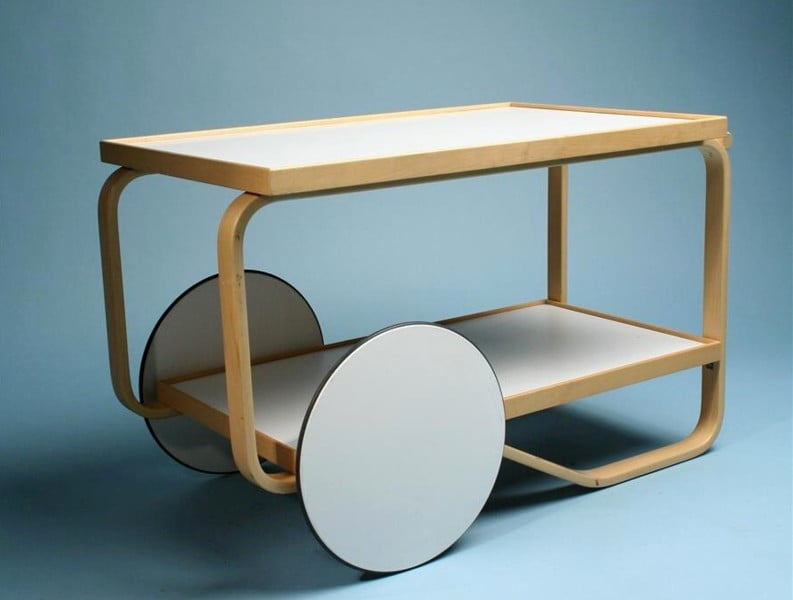
Alvar Aalto, tea trolley
This product was upholstered with reindeer fur. The stools known as “Genius Bar” stools, still used in some stores wherever seating is needed, are produced with black lacquer. In addition, the “High Stool” and “Stool E60” designed by Aalto are offered for sale in the retail stores of a famous phone brand. Some of Aalto’s furniture designs can be listed as follows: the four-legged stool (Stool E60), Armchair 404 (also known as the Zebra Tank Chair), the A805 floor lamp from 1954, and the three-legged stool (Stool 60) from 1933.
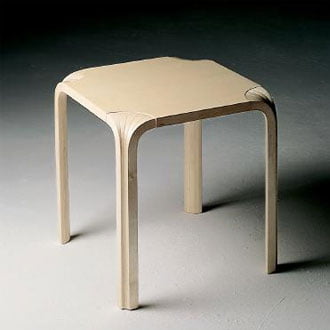
Alvar Aalto, stool
Artek and how the designs survived to the present day
Behind the endurance of Aalto’s furniture stands Artek, the company founded in 1935. It was conceived not merely as a manufacturer but as a cultural enterprise aiming to spread modern design and art. Thanks to this, designs such as Stool 60, the Paimio armchair, various floor lamps and serving trolleys could remain in continuous production for decades. When a design stays on the market for that long, it is a sign that its form has reached a maturity independent of passing fashions.
Aalto’s work in glass design speaks the same organic language. His wave-edged vase, with free curves evoking Finland’s lake-filled landscape, is one of his most recognized objects. All of this output forms a coherent design universe stretching from architecture to furniture and glass.
Why does Aalto still matter?
The legacy Alvar Aalto left is valuable because it shows that modern design is not only about efficiency and simplicity. His work is a successful example of reconciling the possibilities of industrial production with the human need for warmth, texture and comfort. The simple yet inviting, functional yet soft aesthetic that comes to mind today when we say Scandinavian design rests in part on foundations Aalto laid.
For design students, Aalto’s work is a good lesson in why material knowledge, production technique, ergonomics and aesthetics must be considered together when designing an object. From the tea trolley to the reindeer-fur armchair, from stools to glass vases, the principle that every piece should be both beautiful and livable runs consistently through his entire output.