Charles Rennie Mackintosh, born on 7 June 1868 in Glasgow, was a famous Scottish architect and designer who created a design language through his approach of treating architecture, interiors and furniture as a single whole. Thanks to his interest in art and architecture from a young age, he achieved great fame in later years and became one of those who laid the first foundations of the transition to modern architecture.
Mackintosh was educated at the Glasgow School of Art while working at an architecture office in the same period, gaining both a theoretical and a practical grounding. His style is described as the Scottish interpretation of the Art Nouveau movement then spreading across Europe, and it stands at the center of the design approach known as the “Glasgow Style”.
How did the era of The Four Macs begin?
He brought a fresh perspective to Scottish architecture at the turn of the 20th century and became a symbol of elegance. He joined forces with Margaret Macdonald, Frances Macdonald and Herbert McNair, who shared a design sensibility very close to his own, and together they began producing unique works in many fields. Because of the similarity of their surnames, they came to be known as “The Four Macs”. This quartet developed a shared visual language across very different areas: furniture, stained glass, metalwork, posters and decorative panels.
This collaboration became not only a professional partnership but a personal bond as well. Mackintosh married Margaret Macdonald in 1900. Margaret was not only his wife but a creative partner with whom he worked on many projects throughout his career.
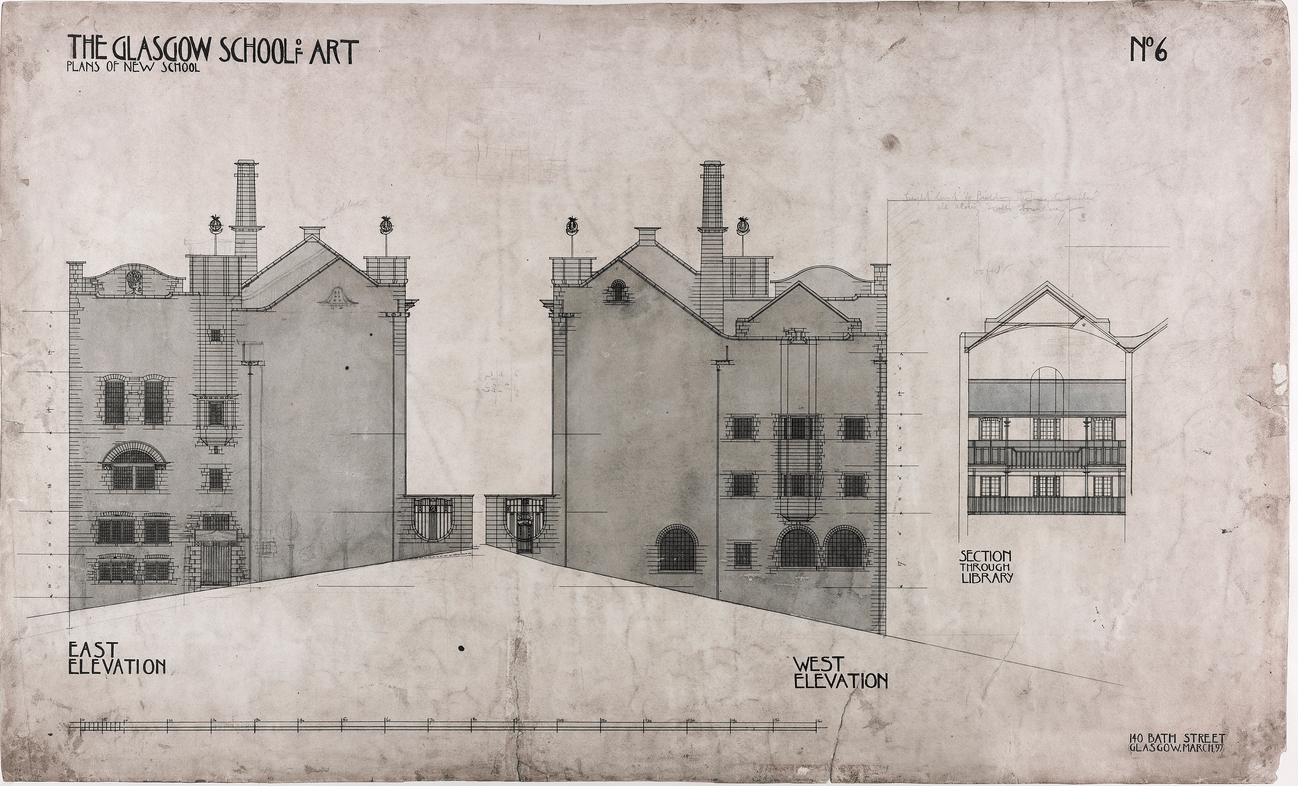
The Glasgow School of Art building in Scotland, designed and completed by Charles Rennie Mackintosh
What are his most notable works?
Mackintosh’s most famous work, regarded as his masterpiece, is the Glasgow School of Art building he designed himself. From the strong, simple lines of its exterior to the woodwork and lighting of the library inside, the building is one of the finest examples of a holistic design approach. Here the architect clearly showed that he had left tradition behind and moved to an entirely new design language.
Some of the Mackintosh couple’s most important works are the interior and furniture designs they created for Glasgow’s tea rooms. The Willow Tea Rooms in particular are an example of unity in which every detail, from the architecture to the furniture, from the door handles to the menu design, was conceived by a single hand. Mackintosh’s other important works include House for an Art Lover, Hill House and The Lighthouse building in Glasgow.
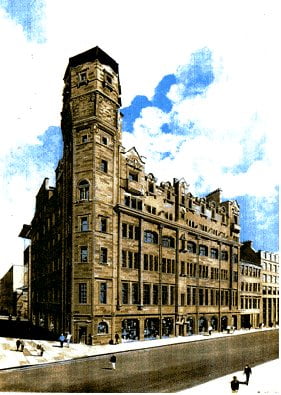
The Lighthouse in Glasgow
What was his approach to furniture and interior design?
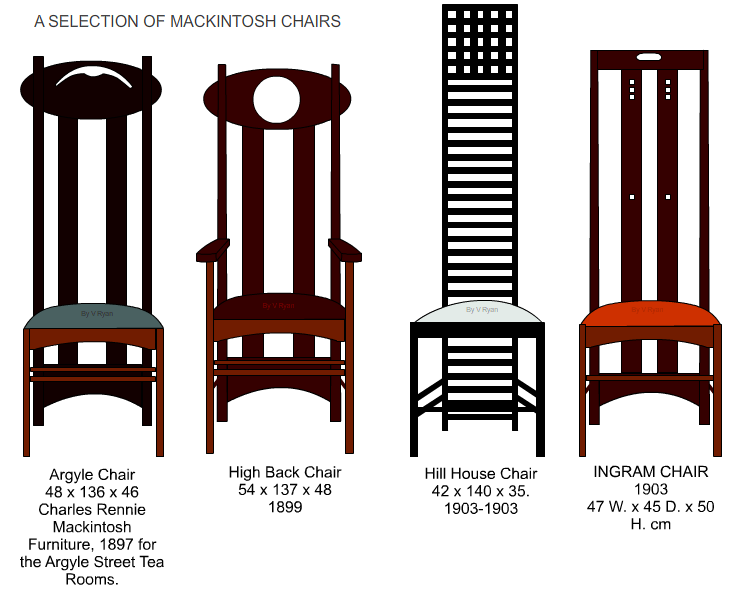
His high-backed chair designs are among his most famous works, leaving their mark on the era. In these chairs, the elongated vertical lines act almost like an architectural element shaping the space, going beyond the function of seating. Mackintosh designed the interiors of nearly every building whose exterior he designed, right down to the furniture, the lighting and the wall decorations. For him, a building was a single whole that could not be broken into parts.
With this holistic approach, he also arranged a music salon in Vienna for the collector Fritz Wärndorfer. In his designs, he studied environmental conditions and the use of a space in detail and produced solutions tailored to them.
Why does his legacy still matter?
During his lifetime, Mackintosh never quite received the recognition he deserved, particularly in Britain; his work resonated more on the European continent, among the designers of the Vienna circle. He died on 10 December 1928. Years after his death, his value was rediscovered, and his unique position as a bridge between late ornamental style and early modernism came to be better understood.
Today his linear, elegant, near-geometric design language remains a source of inspiration across a wide range of fields, from furniture to typography, from interiors to architecture. Glasgow has become a city virtually synonymous with Mackintosh’s work.