Steel
Steel is an alloy composed of iron and carbon, with the carbon content typically ranging from 0.2 to 2.1 percent. Carbon and other alloying elements lock the slip planes in the crystal lattice of the iron atoms and prevent them from sliding past one another, thereby increasing the material’s strength. The carbon content of a steel alloy plays a key role in its classification. On this basis, steel can be divided into three classes:
Low carbon steels: contain 0.022 to 0.2 percent carbon.
Medium carbon steels: contain 0.2 to 0.6 percent carbon.
High carbon steels: contain 0.6 to 1.3 percent carbon.
Steels with a high carbon content are harder and stronger than iron, but less ductile. Raising the carbon content of steel above 1.5 percent only increases hardness rather than strength. Industrially, medium and high carbon steels are the most commonly preferred types.
Steel is one of the most widely used materials in the world.
Where steel is used
Areas of use:
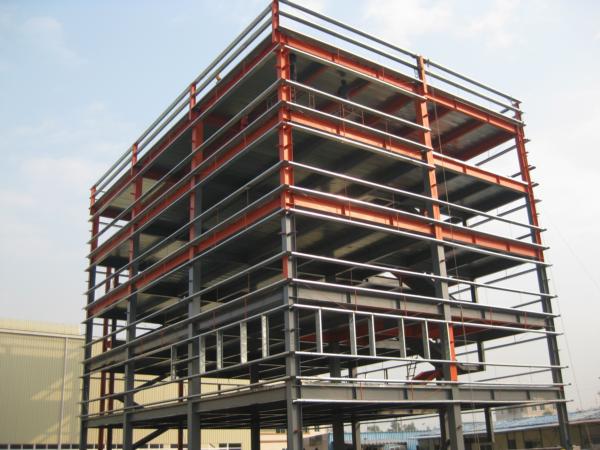
Buildings
Infrastructure
Shipbuilding / Automotive
Machinery industry
Arms industry
What is stainless steel
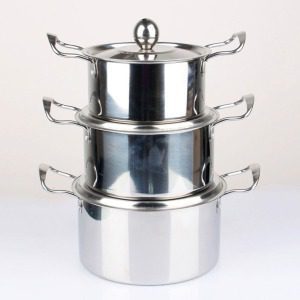
Stainless Steel
Stainless steels are highly corrosion-resistant alloys obtained by adding a minimum of 10 percent and a maximum of 25 percent chromium (Cr) to steel. The chromium migrates to the surface of the steel and forms a chromium oxide layer. This layer forms as a very thin film on the surface and, while having no negative effect on the material’s mechanical properties, prevents the iron from oxidizing. The chromium content of the material is what determines the steel’s corrosion and rust resistance. Nickel (Ni) can also be used as an alloying element alongside chromium. Nickel improves the material’s stainless quality and provides good corrosion resistance. Stainless steels are used in almost every branch of industry.
Types of stainless steel
The main stainless steel grades used in industry and their properties are as follows:
Grade 303 Stainless Steel: The most fundamental property of grade 303 stainless steel is its good machinability. Structurally similar to grade 304, this material can be machined far more easily than 304.
Grade 304 Stainless Steel: Grade 304 stainless steel is also known as 18-10 or 18-8 steel. It is the most fundamental steel grade, and all of its properties are above average.
Grade 304L Stainless Steel: Grade 304L stainless steel is very similar in properties to 304. This grade contains considerably less carbon, which gives it a more elastic structure.
Grade 316 Stainless Steel: In short, grade 316 stainless steel is a more corrosion-resistant version of grade 304. In terms of mechanical properties, it is quite similar to grade 304 stainless steel.
Grade 316L Stainless Steel: Grade 316L is the lower-carbon version of 316. The reduced carbon makes this steel more elastic, but it also makes the steel harder to machine.
Grade 316 Ti Stainless Steel: Grade 316 Ti stainless steel is the titanium-bearing version of grade 316. The added titanium significantly increases the steel’s corrosion resistance.
Grade 420 Stainless Steel: The most important property of this steel type is that it can be heat treated. The surfaces of grade 420 stainless steels can be brought to high hardness levels after heat treatment.
Grade 431 Stainless Steel: Grade 431 stainless steel can be considered a step up from grade 420. Its corrosion resistance is higher than that of the 420 series, and it can also be brought to higher surface hardness levels.
Grade 430 Stainless Steel: Stainless steels of this grade are generally used in less demanding environments. They are not suitable for harsh, highly abrasive corrosive conditions. Typically used for a good surface finish and an attractive appearance, this steel type is frequently chosen for decorative purposes.
Grade 430F Stainless Steel: Grade 430F stainless steel is preferred in conditions that are not particularly demanding. Its easy machinability is its most important property.
Duplex Grade Stainless Steel: Duplex materials are steels that combine several important properties in one alloy. The 1.4462 duplex material, which belongs to the duplex stainless group, has both outstanding mechanical strength and very high corrosion resistance.
Grade 630 Stainless Steel: Known as grade 630 stainless steel, this steel type is also called 17-4 PH steel. Its most important property is its very high mechanical values. With one of the highest strength levels available, this steel has a tensile strength of up to 1100 MPa.
Sources:
http://www.bircelik.com/paslanmaz\_celik\_ozellikleri-784\_tr\_lc.html