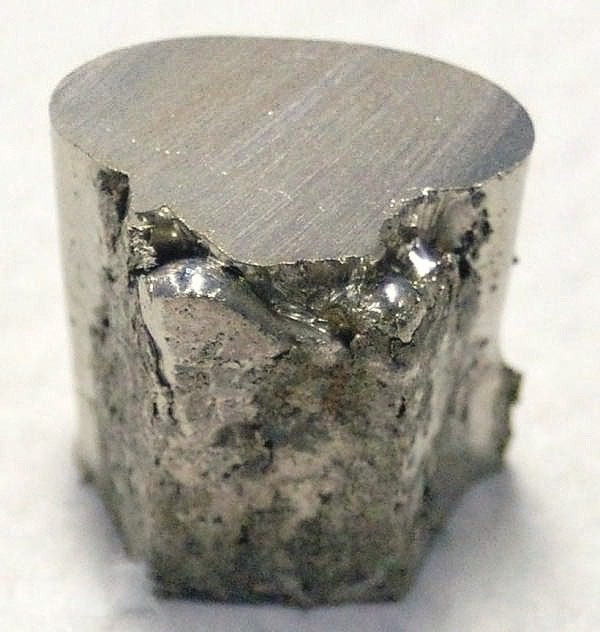
Nickel (Ni)
Nickel is a silvery white, lustrous and hard element found in group VIII B of the periodic table. In nature, nickel is generally found together with cobalt. It is highly resistant to air, water, oxidation, wear and chemicals. As a result, it does not rust and keeps its shine for a long time. These properties give nickel an important role in metal plating. Metals such as iron, steel and copper in particular are plated with nickel. The area where nickel is used most, however, is stainless steel production. Nickel improves the malleability of stainless steel and its resistance to rusting. In addition, thanks to a natural property that allows it to change dimensions slightly within a magnetic field, nickel is also highly resistant to both low and high temperatures.
What are nickel’s physical and chemical properties?
Nickel is a transition metal that sits in the same neighborhood of the periodic table as iron and cobalt. It has a high density and a hard yet malleable and ductile structure; in other words, it can be shaped even when cold, and drawn into wire or rolled into sheet. Its resistance to visible rusting comes from the thin, dense oxide layer that forms on its surface; this layer protects the underlying metal against further wear.
One of nickel’s most distinctive properties is that it is ferromagnetic. Iron, cobalt and nickel are among the few elements that can be magnetized at room temperature. This property makes nickel valuable in magnet production and magnetic alloys. Its resistance to high temperatures also allows it to serve in demanding environments where heat and mechanical stress occur together.
Which alloys use nickel?
Much of nickel’s industrial value comes from the alloys it forms with other metals. Combined with chromium and iron, it becomes a fundamental component of stainless steel. Its alloys with copper show high resistance to seawater and are therefore preferred in shipbuilding and marine applications. Nickel-based superalloys are used in jet engines, turbines and components exposed to extremely high temperatures; these materials retain their strength even at temperatures where other metals soften.
Nickel also plays an important role in rechargeable battery technologies. Nickel-based battery chemistries are part of energy storage solutions across a wide range of applications, from portable devices to electric vehicles.
Why is nickel preferred in design?
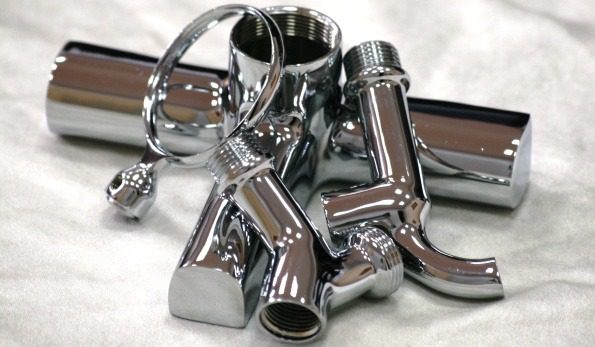
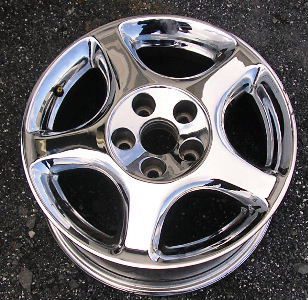
From the perspective of industrial and product design, nickel’s appeal comes down to two things: durability and appearance. When the frequently touched parts of a product that are exposed to moisture and wear are nickel plated, they both last longer and gain a bright, clean surface. This is why nickel plating is so common on bathroom and kitchen fittings, door hardware and many metal accessories.
One point designers should keep in mind is nickel allergy. Some people’s skin can react with irritation to prolonged contact with nickel. For products that touch the skin, such as jewelry, watch straps and eyeglass frames, materials with low nickel release or alternative coatings may therefore be preferred. A good design decision considers not only the technical properties of a material, but also how the user will come into contact with it.
Where nickel is used
Areas of use:
Metal plating
Stainless steel production
Alloys (superalloys)
Chemical industry
Fabricated products (cutlery sets, tools such as hammers and pliers, etc.)
Aircraft, automotive and shipbuilding industries (aircraft, trucks, locomotives, engine parts, etc.)
Building materials
Coin minting
Magnet production
Rechargeable batteries

http://tr.wikipedia.org/wiki/Nikel
http://www.bilgiustam.com/nikel-nedir-ozellikleri-nelerdir-ve-nerelerde-kullanilir/
https://www.nkfu.com/nikel-nedir-nikel-elementinin-ozellikleri/
http://haberustam.com/nikel-nedir-ozellikleri-kullanim-alanlari/