
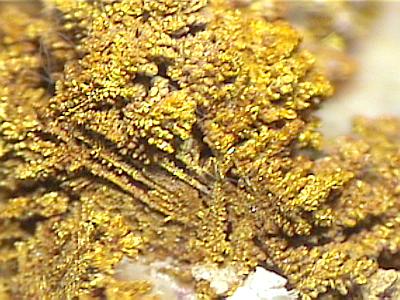
Gold (Au)
Gold is a bright yellow element found in group I B of the periodic table; it is quite soft in its pure state and can therefore be easily shaped by hammering. It occurs in pure form in nature (it can be obtained at 99.999 percent purity). Its thermal and electrical conductivity is higher than that of copper. It has high resistance to corrosion, sulfidation and oxidation, and it has radiation-shielding properties. In addition to being a stable element that resists acids and does not react easily, it is unaffected by air and water; as a result, it never rusts, never tarnishes and never loses its shine.
Gold alloys and their colors
Because pure gold is very soft and expensive, it is generally used in the form of alloys. Depending on the proportion of alloying elements used, varieties of gold known as green, red and white gold can be obtained, in addition to the familiar yellow of pure gold. For example, gold-silver-copper alloys can take on green, yellow or red colors, while gold-nickel-copper alloys can be white.
Gold-silver alloys: An alloy of 75 percent gold and 25 percent silver is green in color and used in jewelry making. An alloy of 40 percent gold and 60 percent silver is hard.
Gold-nickel alloys: These form the basis of the white gold used in jewelry making. This alloy contains 80 percent gold, 16 percent nickel, 3 percent zinc and 1 percent copper.
Gold-copper alloys: Widely used in coin minting. Easy to work.
Where gold is used
Areas of use:
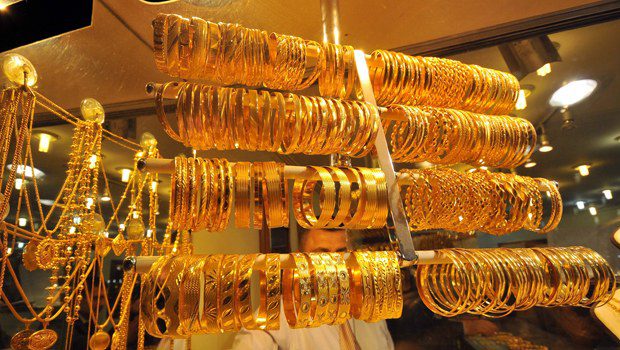
Jewelry
Decoration work
Fine arts
Dentistry
Plating
Space and construction applications, thanks to its radiation shielding
Electrical devices
Cable connectors
http://www.frmtr.com/tip-biyoloji-farmakoloji/4249858-altinin-fiziksel-ve-kimyasal-ozellikleri.html
https://www.nkfu.com/altin-nedir-altin-elementinin-ozellikleri/