What Is Industrial Product Design?
Industrial product design, also known as industrial design, is the profession of designing products intended for mass production by considering both the needs and demands of consumers and the conditions of manufacturers. In this process, many criteria are evaluated together: creativity, functionality, ergonomics, technical and aesthetic qualities, material selection, production techniques, cost and the product’s potential position in the market. The goal is to create products that are useful, producible and valuable to the user. The concept of industrial design emerged with the Industrial Revolution, which is why it is widely used today to refer to the design of mass-produced products.
The Turkish Patent and Trademark Office defines design as “the whole formed by various elements or features perceived by the human senses, such as line, shape, form, color, texture, material or flexibility, of the entirety or a part of a product, or of the ornamentation on it.” Every mass-produced product we design, from the simplest objects we encounter in daily life to the most complex high-technology devices, falls within the scope of this profession.
When and why did industrial design emerge?
The birth of industrial design as a profession is closely tied to the transformation of production. Before the Industrial Revolution, objects were largely produced one by one by craftsmen, and each piece could differ from the next. With the spread of mass production, thousands of copies of the same product had to be manufactured consistently. This made it necessary to plan a product’s form, function and production method before manufacturing began. The designer’s emergence as a specialist separate from, and leading, the production process was born from this need.
Over time, design went beyond merely making a product producible. The product’s use, its meaning, its relationship with the user and its competitiveness in the market also became subjects of design. Industrial design thus developed into a multifaceted discipline that brings together fields such as engineering, marketing, materials science and human behavior.
What does an industrial product designer do?
An industrial product designer first prepares the design project for a new product. Within this project, they create a design timeline for the product to be designed, and the direction of the design begins to take shape. Following this process, the designer first produces sketches and technical drawings of the new product, then creates multiple mockups. Among the mockups, the one best suited to the product’s chosen final design is selected, and a model is built accordingly. Based on this model, real dimensions and materials are decided, and a sample of the product in its final form is prepared. Today, alongside technical drawing, designers also make extensive use of two- and three-dimensional drawing software both during the design process and in the product development stage.
According to METU’s definition, an industrial product designer contributes to many stages, from identifying needs, to transforming those needs into new products or reflecting them in existing products through modifications, to evaluating products after they have completed their useful life. Throughout the design process, the designer considers both the manufacturer’s concerns, such as production capabilities, cost, market share and target audience, and the user’s cultural values, aesthetic taste, ease of use and safety.
What are the stages of the industrial design process?
Industrial design is not a task that begins with inspiration and ends in a single step; it is a process made up of successive stages that are often repeated through feedback loops. This process generally includes the following steps:
- Research and problem definition: User needs, market conditions and the shortcomings of existing products are examined. The problem the design must solve is clearly defined.
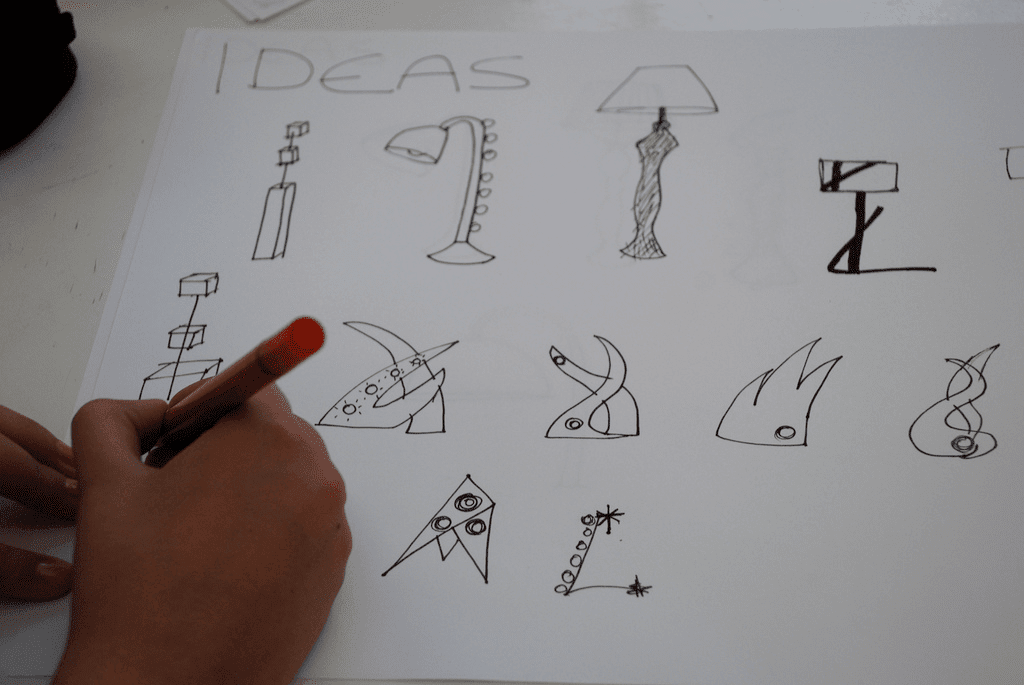
- Idea generation and sketching: A large number of different solution proposals are put forward through quick sketches. At this stage, the goal is not to find a single right answer but to see the widest possible range of possibilities.
- Concept selection and refinement: The most promising ideas are evaluated, and the most suitable concept is selected and refined in terms of form, proportion and function.
- Mockup and model production: The design is tested physically. Mockups are used to try out proportion and appearance, while models are used to test dimensions and use.
- Prototype and testing: Function, ergonomics and durability are tested on a sample prepared with real materials and dimensions.
- Preparation for production: Technical drawings, material and production method decisions are finalized, making the product ready for mass production.
These stages rarely proceed in a straight line; based on test results, earlier steps are revisited and the design is iterated. This iterative structure is one of the defining characteristics of good design.
What qualities should a good industrial designer have?
Industrial product designers should be creative individuals capable of imagining objects that have never been designed before and putting them down on paper. They are expected to have the perceptual ability to turn what they imagine, and their two-dimensional drawings, into three-dimensional objects, to establish relationships between shapes and to analyze existing relationships. An interest in the fine arts, openness to innovation and a perspective that continuously follows developments are also important for this profession.
In addition, an industrial designer should be able to observe users and read their needs correctly, communicate effectively with different disciplines (engineering, marketing, production) and maintain a balance between aesthetics and function. Because industrial design is not merely about producing a beautiful form; it is the art of creating useful, producible and meaningful products.