Biomimicry: Design Inspired by Nature’s Perfection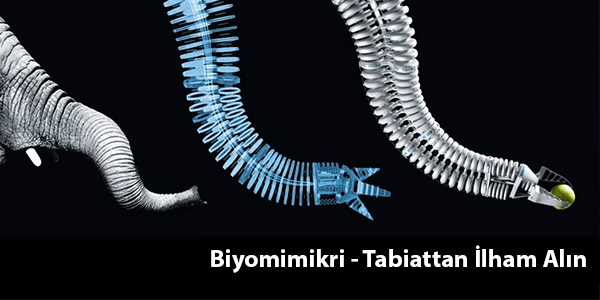
Biomimicry, though not widely known as a concept, is a way of easing daily life and advancing science by imitating nature, and it has existed throughout human history. Biomimicry began the moment humankind, spellbound by nature’s perfection, discovered that benefiting from it was possible only by adapting to it. Many of today’s scientists study animal and plant systems to create designs of great importance for humanity.
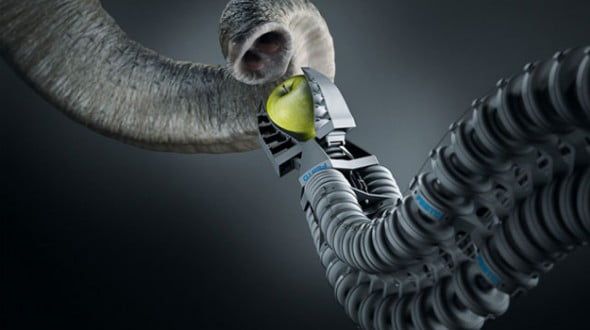
“Biomimicry was first used as a concept by Janine M. Benyus in 1997.”
Where does the concept of biomimicry come from?
The word biomimicry derives from the combination of the Greek words bios, meaning “life,” and mimesis, meaning “imitation.” Its meaning is direct: to imitate life. The person who popularized the concept in its current sense was the biologist Janine M. Benyus, through the book she published in 1997. According to Benyus, nature is a research laboratory that has been running for more than four billion years; over that time, every solution that did not work was eliminated, leaving only the designs best adapted to their conditions. The smartest path for humanity is to rediscover these time-tested solutions.
What sets biomimicry apart is that it regards nature not as a warehouse of resources but as a teacher. Using an animal’s form as a source of aesthetic inspiration is biomorphism; biomimicry, by contrast, analyzes why that form works, what problem it solves and how, and carries that functional logic into engineering. This is why biomimicry is an interdisciplinary field where not only biologists but also engineers, architects and designers work together.
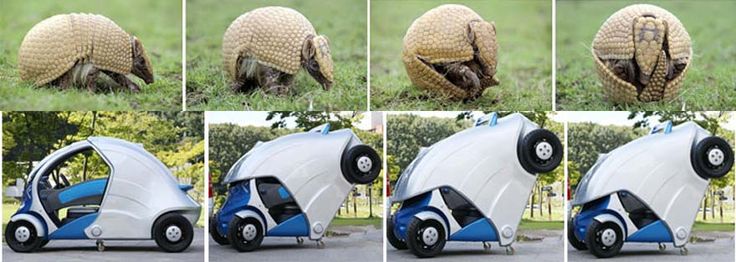
Biomimicry Armadillo car design
In which fields is biomimicry used?
Today, biomimicry principles inspire work in many fields, including medicine, chemistry, architecture and engineering.
Termite mounds are a kind of tower with remarkable ventilation and heat-regulation systems. The perfection of these structures was revealed through years of scientific observation. Drawing on the passive ventilation logic that keeps the temperature inside termite mounds stable regardless of external conditions, engineers are developing climate-control approaches that consume less energy.
Sunflowers turn their heads toward the sun throughout the day to make the most of solar energy. Solar panels, once fixed in place, were made movable by imitating this principle, and systems that track the sun all day now produce more energy. Bats, meanwhile, use a kind of natural sonar called echolocation to navigate in the dark; they “hear” their surroundings by measuring the echo of the sounds they emit. The same principle forms the basic logic of many sonar and radar systems.
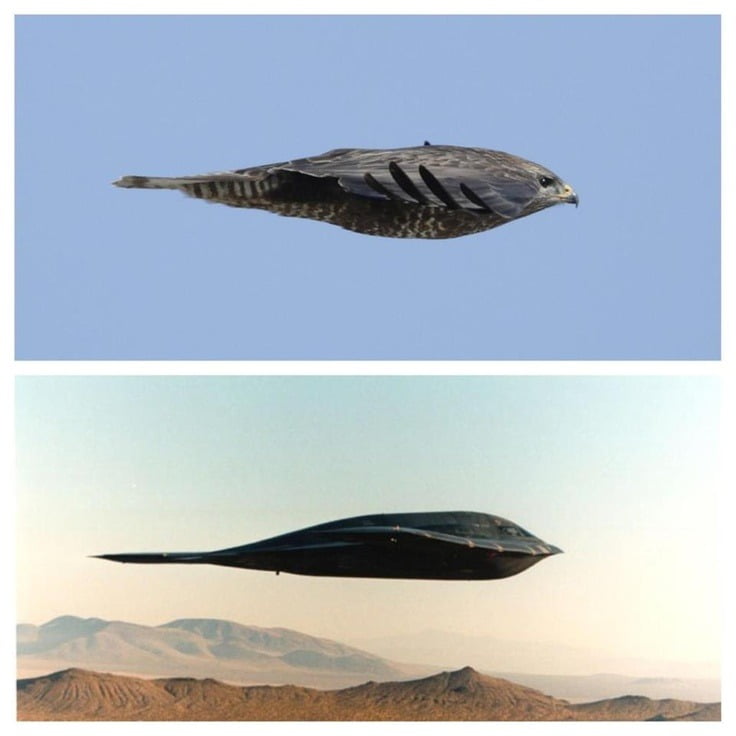
Stealth aircraft
The aerodynamic forms and wing movements of birds have long been studied to make aircraft fly more efficiently. The winged flight suits people use during free fall were inspired by flying mammals, particularly the taut membrane structure of bats and flying squirrels.
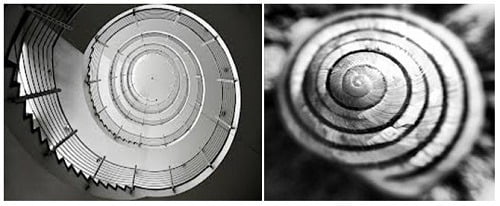
Biomimicry architecture
What are the classic examples of design learned from nature?
One of the best-known examples of biomimicry is the story of the hook-and-loop fastener. When the Swiss engineer George de Mestral examined under a microscope the burdock seeds that clung to his dog’s fur and his trousers, he noticed that the tiny hooks at the tips of the seeds caught on fabric loops, and from this mechanism he developed the velcro fastening system. Similarly, the surface of the lotus leaf rolls water off without holding any of it, thanks to its microscopic roughness; this property, called the “lotus effect,” inspired self-cleaning paints and fabric surfaces.
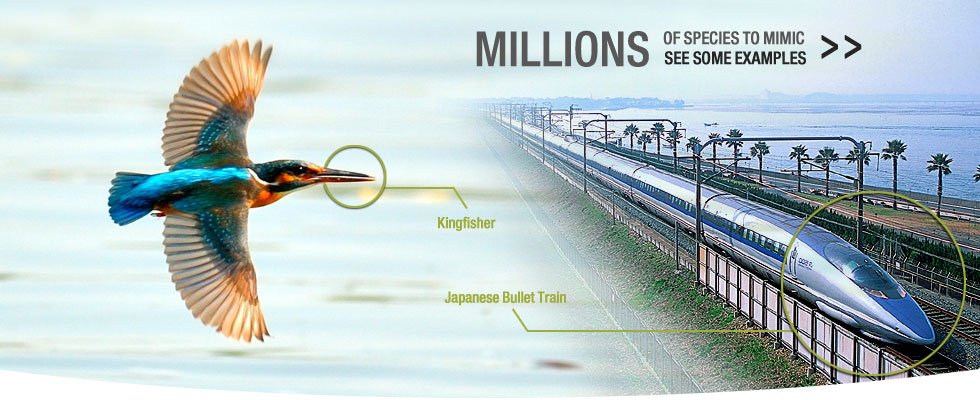
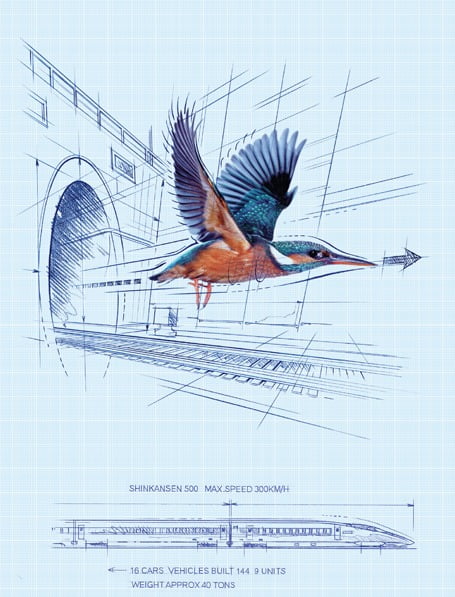
Another striking example is the nose of high-speed trains. The noise created by the pressure wave that forms when a train enters a tunnel was reduced by imitating the long, pointed beak of the kingfisher, which lets the bird dive into water with minimal splash. These examples show that biomimicry is not merely a theory but produces products that directly affect daily life.
What do the secrets of freezing and survival add to biomimicry?
The way boats move quickly through water is shaped by the movement and body principles of marine creatures such as dolphins. Some species of frogs and fish hide beneath the ice for long months in a state that could be considered death, then revive unharmed as the weather warms. Humans are pursuing these secrets of freezing and surviving without damage. Understanding the natural “antifreeze” molecules that prevent ice crystals from shattering these creatures’ cells is shedding light on medical research into the long-term preservation of tissues and organs.
All these examples point to a common lesson: nature produces solutions without wasting resources, by reusing waste, and without conflicting with ambient conditions. Biomimicry aims to transfer exactly this logic to human design. That is why it is seen not only as innovative but as one of the most promising approaches for a sustainable future.
Source: biomimicry.net