
The golden ratio actually means nothing for design. Why?
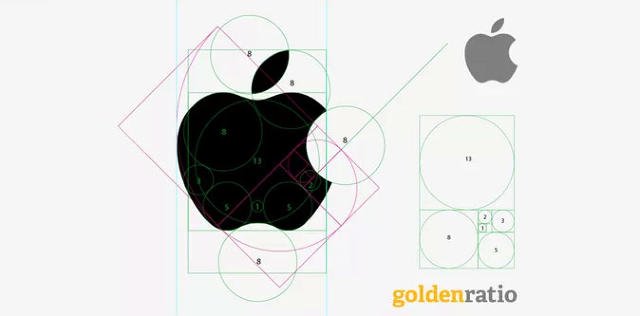
Over the years, the golden ratio has gained enormous fame in the worlds of art, architecture and design. Great names like Le Corbusier and Salvador Dalí used this number in their work. The Parthenon, the Pyramids of Giza, Michelangelo’s paintings, the Mona Lisa and even the Apple logo are all said to contain this number.
All of this, the aesthetic claims of the golden ratio, is nothing more than urban legend, myth and design gossip. Most designers do not use the golden ratio, and those who do largely consider it unimportant. Nor is there any scientific research to support it. Those who believe in the golden ratio are really just chasing the mathematical beauty of a 150-year-old legend.
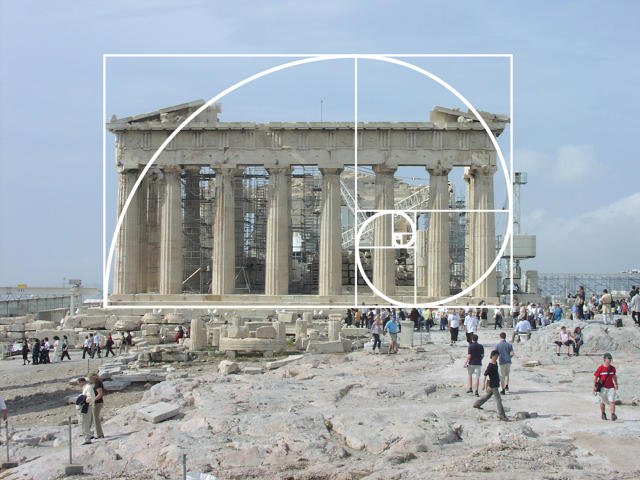
Flickr user Sébastien Bertrand
What Is the Golden Ratio?
First described 2,300 years ago in Euclid’s Elements, the original definition of the concept goes like this: if a smaller number is compared to a larger one, and the resulting ratio equals the ratio of the larger number to the sum of the two, the two numbers are considered to be in the golden ratio. The value that satisfies this condition is usually written as 1.6180. The most famous application of the golden ratio is the shape known as the golden rectangle, which can be divided into a perfect square and a smaller rectangle with the same proportions. You can keep applying this theory to divide more and more objects.
The golden ratio always falls slightly short.
To put it in plain language: say you have two objects (or one object that you can split into two, just like the golden rectangle). If you perform the math above and arrive at the value 1.6180, the two objects are judged to be in the golden ratio. The problem here is that when you actually do the math, the golden ratio is not 1.6180 but 1.6180339887… and it keeps going; the decimals continue to infinity.
Keith Devlin, a professor of mathematics at Stanford University, says: “Strictly speaking, it’s impossible for anything in the real world to fall into the golden ratio, because it’s an irrational number.” You can get close to this value using more standard proportions. The iPad’s 3:2 display, or the 16:9 aspect ratio of your HDTV, according to Devlin, “hover around it.” But the golden ratio is like the number pi. Just as a perfect circle cannot be found in the real world, the golden ratio cannot be applied to any real-world object. It will always fall slightly short.
The Golden Ratio and the Mozart Effect
Perhaps we are getting into too much detail. Isn’t 1.6180 close enough? Yes, probably close enough. If only there were scientific support for why we find certain objects, like the Parthenon or the Mona Lisa, aesthetically pleasing. Unfortunately, no such support exists.
Devlin believes the link between the golden ratio and aesthetics essentially comes from two people: the first was misinterpreted, and the second made things up.
The first was Luca Pacioli, who wrote the book De Divina Proportione in 1509, and the concept of the golden ratio was born. Strangely, Pacioli did not advocate a golden-ratio-based theory of aesthetics in his book, nor did he suggest it should be applied to art, architecture and design; instead, he discussed the Vitruvian system, named after Vitruvius, the first-century Roman architect. According to Mario Livio, who actually wrote a book on the golden ratio, the golden ratio view was wrongly attributed to Pacioli in 1799. But Pacioli was a close friend of Leonardo da Vinci, whose works gained enormous fame in the 19th century. Since Da Vinci had illustrated De Divina Proportione, speculation began that Da Vinci himself had embraced and used the golden ratio in his exceptionally beautiful paintings.
One of those who believed this was Adolf Zeising. “He’s the guy you really want to burn at the stake for the fame of the golden ratio,” Devlin says, laughing.
Zeising was a German psychologist who claimed that the golden ratio was a universal law that “permeates, as a paramount spiritual ideal, all structures, forms and proportions, whether cosmic or individual, organic or inorganic, acoustic or optical, of beauty and completeness in nature and art.”
Zeising was extremely long-winded, and his one problem was that he saw patterns where none really existed. For example, according to Zeising, the golden ratio can be applied to the human body by dividing the distance from the navel to the toes by the person’s total height. According to Devlin, these are just arbitrary body parts fitted to a formula: “When you measure anything as complex as the human body, you can easily find plenty of ratios that are very close to 1.6.”
In the author’s own research, no example of the golden ratio actually being used has been found.
But whether the value was invented or not made no difference. Zeising’s theories became enormously popular and are described by Devlin as “the 19th-century equivalent of the Mozart Effect,” a reflection of the belief that “listening to classical music improves intelligence.” Yet the concept never disappeared. In the 20th century, the famous Swiss-French architect Le Corbusier used the golden ratio in his Modulor system, built on anthropometric proportions. Dalí painted one of his masterpieces, The Sacrament of the Last Supper, on a canvas shaped like a golden rectangle. Meanwhile, art historians, eyeing the great designs of history, began applying the golden ratio to works such as Stonehenge, Rembrandt, Chartres Cathedral and Seurat. The link between the golden ratio and beauty has survived to this day in the worlds of art, architecture and design as a piece of fabricated news.
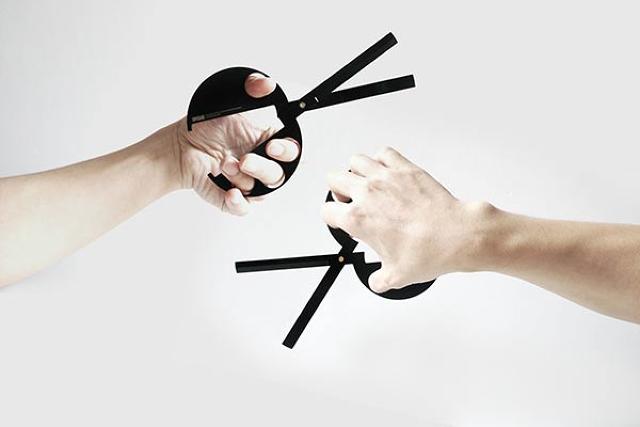
Ian Yen via Yanko Design
You Don’t Have to Prefer the Golden Ratio
In the real world, people don’t have to prefer the golden ratio.
In an ongoing, as-yet-unpublished study at Stanford, Devlin has worked with the university’s psychology department to ask hundreds of students over the years which rectangle they like best. Students were shown several rectangles and asked to pick their favorite. If the golden ratio had any connection to the idea of aesthetic beauty, students should have chosen the rectangle closest to the golden ratio. But that didn’t happen; students picked rectangles at random. When asked to repeat the exercise, they chose different rectangles. “It’s a great way to show new psychology students the complexity of human perception,” Devlin says. And no impression emerged that the golden ratio evokes an aesthetically pleasing response in people.
Devlin’s experiments aren’t the only ones showing people who don’t prefer the golden ratio.
According to a study conducted at the Haas School of Business at Berkeley, on average, consumers preferred rectangles with ratios ranging from 1.414 to 1.732. This range includes the golden rectangle, but its exact dimensions are not precisely the preferred value.
Most of Today’s Designers Don’t Find the Golden Ratio Useful
Designers asked about the golden ratio don’t think it is very useful. Richard Meier, the legendary architect behind the Getty Center and the Barcelona Museum of Contemporary Art, says he used an architect’s triangle with golden ratio proportions early in his career, but never designed his buildings with the golden ratio in mind. In a phone interview, Meier says: “There are so many other numbers and formulas that are more important when designing a building. These are formulas that maximize certain spaces or determine structural loads.”
Alisa Andrasek, the designer behind Biothing, an online repository of computational designs, says she agrees. In her email, Andrasek writes: “I don’t recall ever using the golden ratio in my work.” She adds: “I can see the golden ratio being embedded into different systems as additional ‘seasoning,’ but building an entire structure around this value, as was done historically, would be far too simplistic in my view.”
Giorgia Lupi of Accurat, the Italian design and innovation firm, says that at best, the golden ratio matters to designers about as much as any other compositional rule, giving the rule of thirds as an example: it might be a decent bedside guide, but good designers can easily reject it. “I honestly don’t know how many designers deliberately use the golden ratio in practice,” she says in her email, adding: “Personally, I’ve never worked with the golden ratio and never used it in my projects.”
Among the designers we spoke to, industrial designer Yves Béhar (Fuseproject) was probably the kindest toward the golden ratio. “When I look at the proportions of the products and graphics we create, I check the golden ratio, but for information rather than as dogma,” he says. Even so, he says he has never driven a design with the golden ratio in mind. “It’s important as a tool, but not a rule,” he says.
Even designers with a background in mathematics are skeptical about using the golden ratio in design. Edmund Harriss is a clinical assistant professor in the mathematics department at the University of Arkansas and uses many formulas to help produce new works of art. But Harriss thinks the golden ratio is, at best, one of many tools at the fingertips of designers who use math. “In many ways it’s a simple number, and as a result it shows up in a lot of places,” Harriss says in an email interview. “But it’s definitely not the universal formula behind aesthetic beauty.”
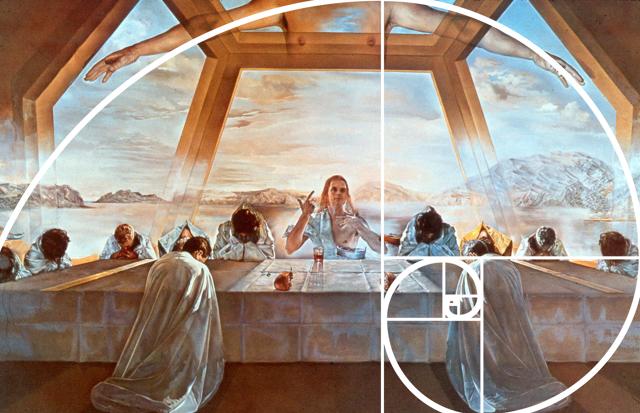
The Sacrament of the Last Supper, 1955, Salvador Dali
So Why Does the Myth Persist?
If the aesthetic benefit of the golden ratio is so fabricated, why does the myth live on?
According to Devlin, it’s very simple. “We are creatures genetically programmed to see patterns and to seek meaning,” he says. Being comfortable with something as arbitrary as aesthetics is not in our DNA, so we often try to fill the gap with our limited grasp of mathematics. But most people don’t really understand math, or how a simple formula like the golden ratio gets applied to a complex system, so we can’t debug our own errors. “People think they see the golden ratio around them, in the natural world and in the objects they love, but they can’t prove it,” Devlin says. “They are victims of our natural desire to find meaning in the shape of the universe, and without the mathematical skills, they can’t recognize that the things they think they see are illusory.”
If you’re seeing the golden ratio in the designs you love, you’re probably imagining it.
Which means this: if we see the golden ratio in the designs we love, what we’re seeing is probably just a trick our minds are playing on us.
Original article: fastcodesign
Translated by: G. Sevde ŞAHİN